

Structured Engineering Data Waiting to Be Used – Piping Isometrics
Piping isometrics contain valuable engineering information that teams repeatedly interpret, transfer and check. IDS™ DataOps turns these documents into structured data, material take-offs and 3D models—bringing engineering information closer to the procurement, fabrication and construction decisions that depend on it.
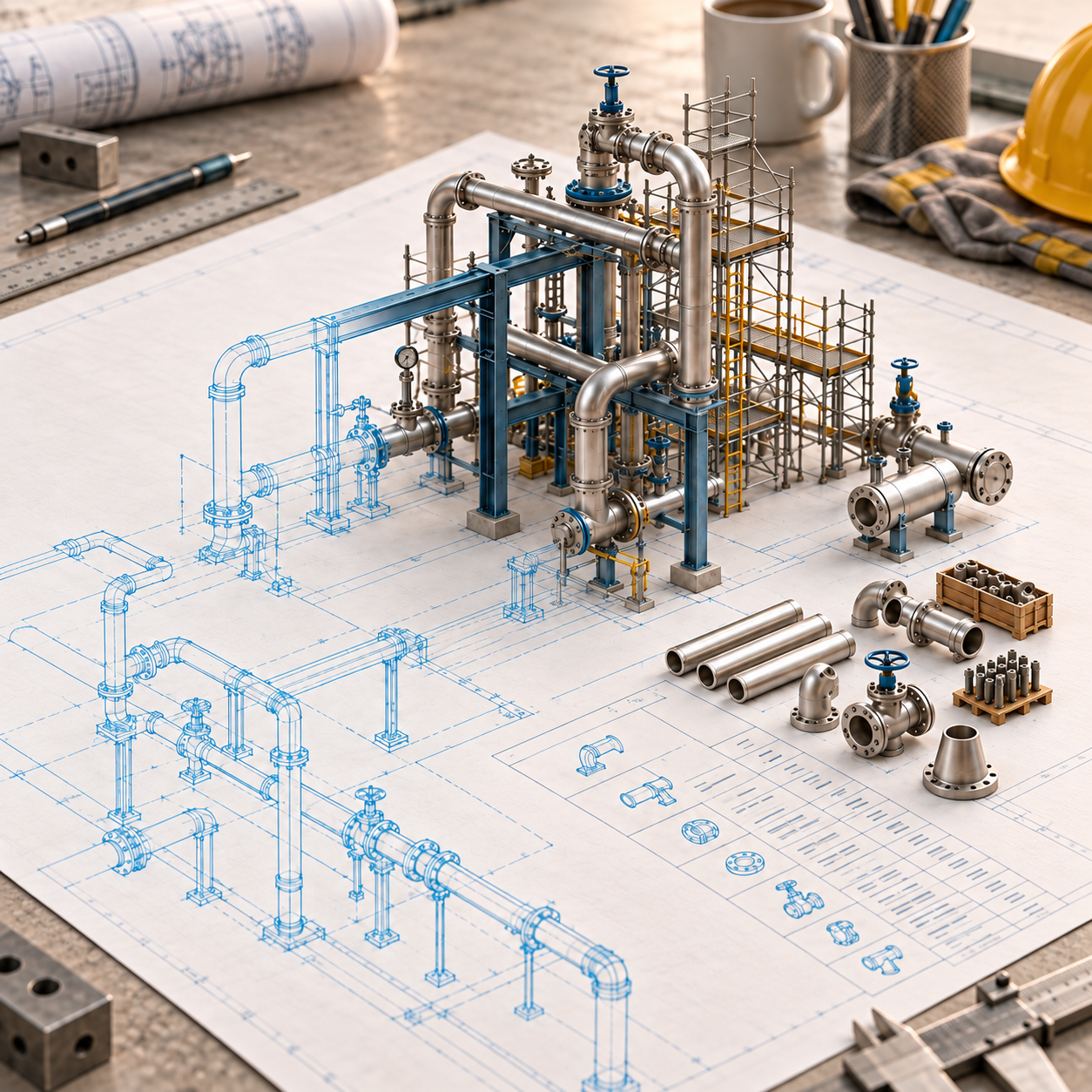
In piping projects, isometric drawings sits remarkably close to execution.
What I mean is - They contain the information required to understand pipe configuration, dimensions, fittings, valves, specifications and quantities. They support fabrication, procurement and construction. Material take-off, in particular, depends on correctly identifying and tabulating the individual components represented in those drawings.
Yet a considerable amount of this information must still be read, interpreted, transferred and checked (mostly manually) before it becomes useful downstream.
That creates an important question:
Why should engineering teams repeatedly reconstruct digital information that already exists in their isometric documents?
This is the problem IDS™ DataOps is addressing.
From data to graphics
Consider a project containing hundreds or thousands of piping isometrics.
Producing an MTO can involve identifying pipe lengths, elbows, tees, reducers, flanges, valves and other components, then transferring those quantities into structured tables for procurement and planning. Manual MTO preparation remains time-consuming and requires careful checking because transcription and interpretation can introduce errors.
The opportunity is therefore larger than simply reading PDFs faster.
The more consequential shift is:
Isometric document → structured engineering data → MTO →intelligent 3D representation
With IDS™ DataOps, pipe isometric documents can be uploaded and processed to extract engineering information, generate Material Take-Offs and build corresponding 3D models directly.
This changes the role of the drawing.
Instead of remaining a document that people repeatedly interpret, it can become an input to a structured engineering workflow.
Why this matters beyond engineering hours
MTO information does not stop at the engineering department.
It informs purchasing and procurement, while piping isometrics themselves support fabrication and field erection. More accurate and accessible material information can therefore influence activities well beyond document preparation.
There is also a broader data-management implication downstream especially in brownfield scenarios where model <> data reconciliation is sometimes critical.
When the extracted information and the resulting 3D representation originate from the same engineering document, teams have an opportunity to review quantities and geometry within a more connected context rather than treating spreadsheets, drawings and models as unrelated outputs.
The real value of this intelligence is not simply extracting more data. It is reducing the gaps and complexities between engineering information and the decisions that depend on it.
For industrial organisations managing large volumes of legacy and current engineering documents, that distinction matters in time and extreme cost savings.
IDS™ DataOps precisely addresses this problem: turning engineering documents into structured information that can be reviewed, visualised and used downstream.
For more information, schedule a demo with the ASETS Team.


30 Knowledge Park Dr, Suite 320
Fredericton, NB E3C-2R2
Canada
2, Faehrbongerten
L-5698 Welfrange
Luxembourg

© 2026 ASETS